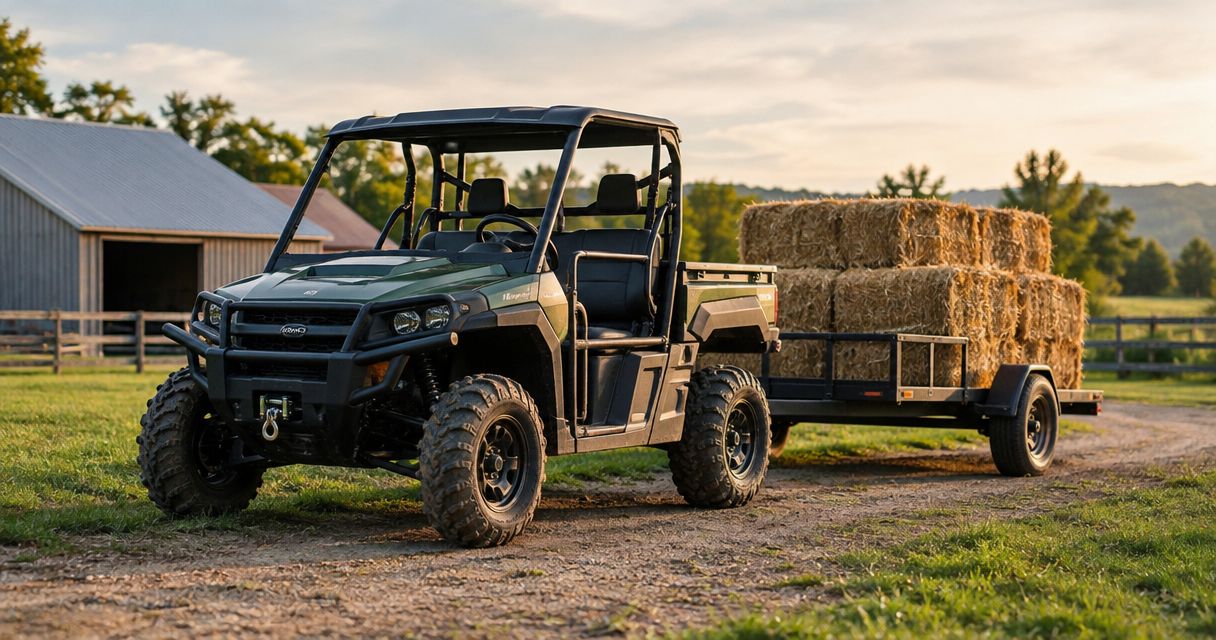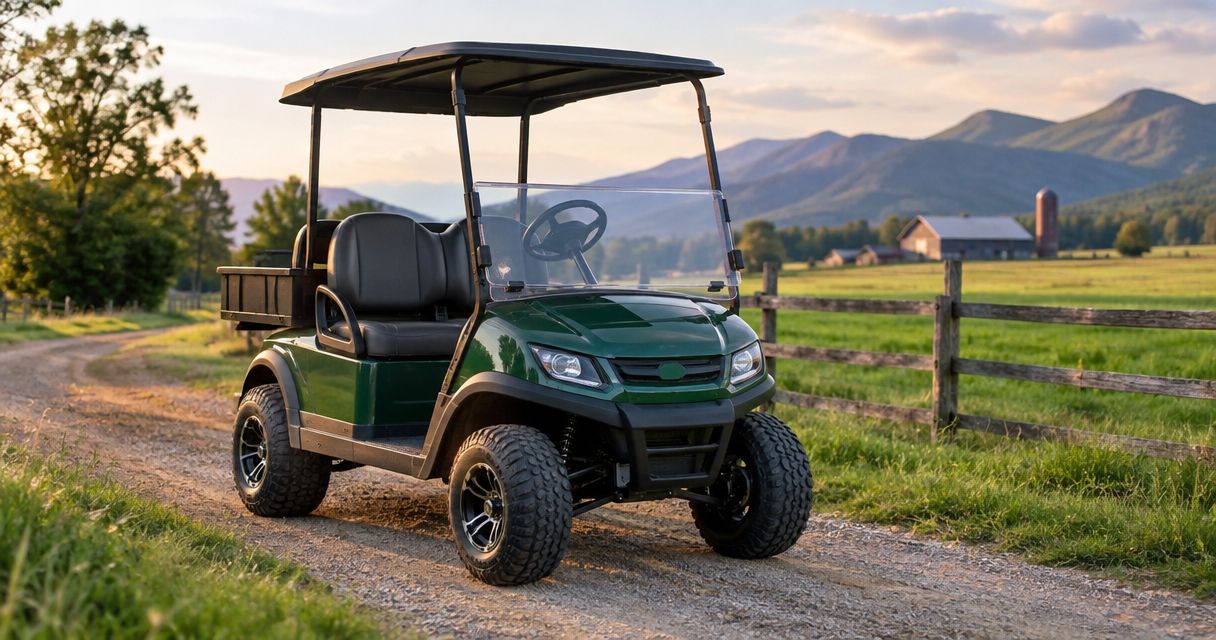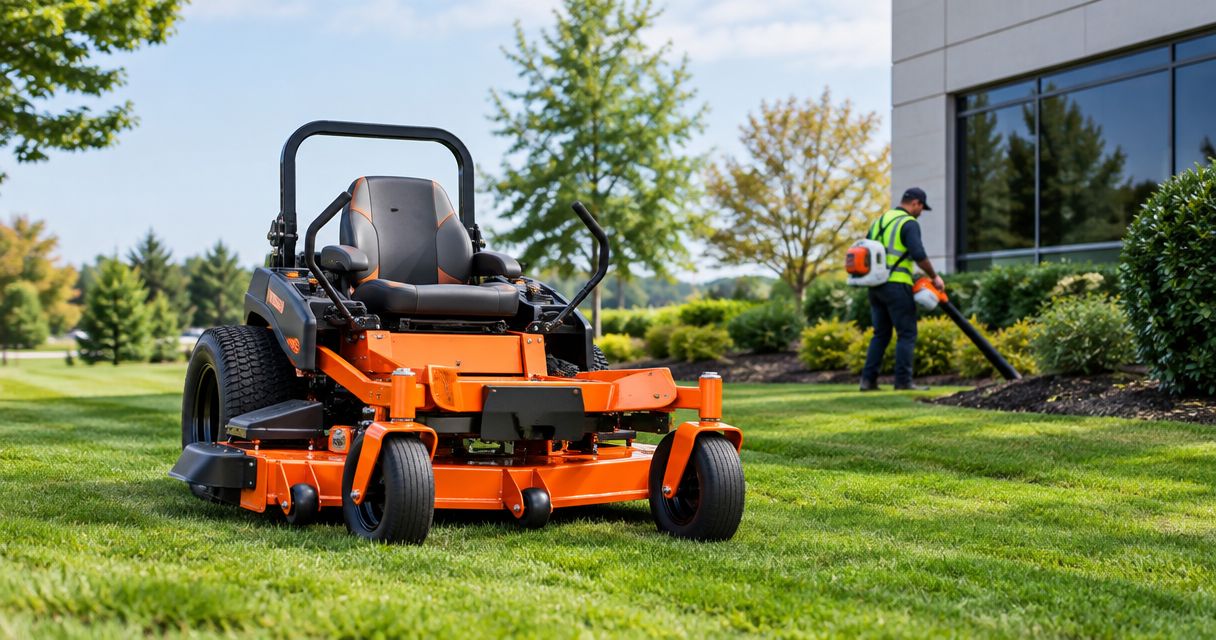
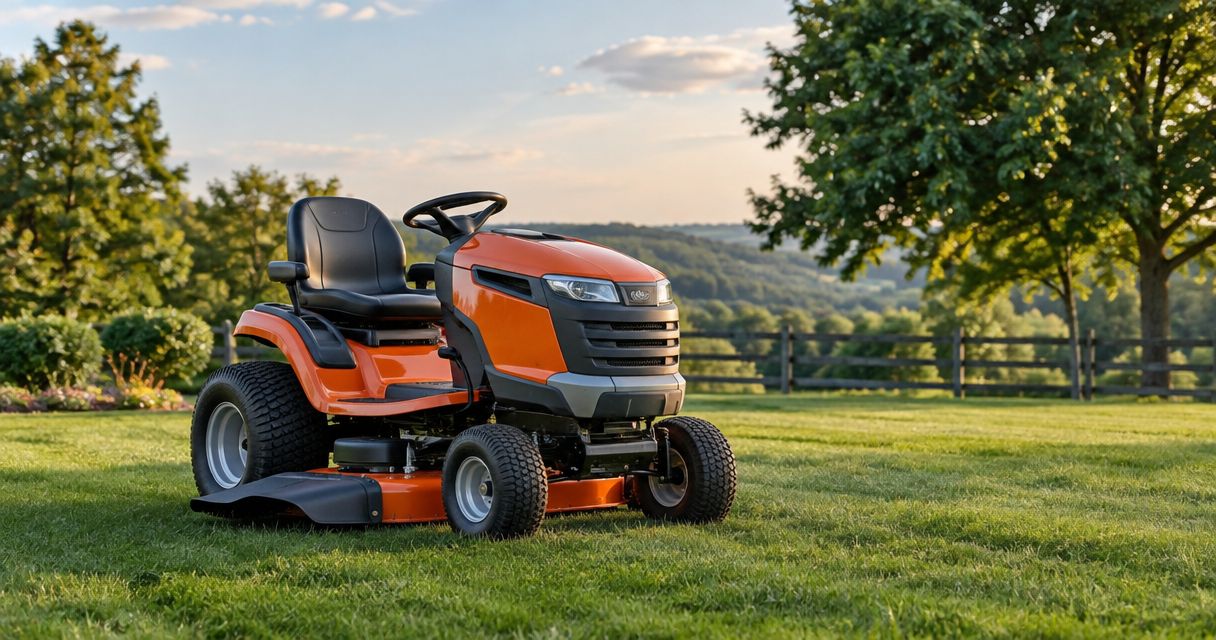
Best overall for open, level yards: a residential zero-turn mower. Best for attachment work: a garden tractor. Best for straightforward mowing: a lawn tractor. Best for repeated, demanding use: a commercial zero-turn mower. The best riding lawn mowers for large yards in Ohio in 2026 match your terrain, access points, and workload—not just your acreage.
- The best riding lawn mowers for large yards depend on terrain, obstacles, access, and maintenance needs.
- Choose a residential zero-turn mower for open, level ground and frequent turns around landscaping.
- Choose a garden tractor when approved attachments matter alongside mowing.
- Atechequip provides mobile lawn mower repair and maintenance for Northeast Ohio homeowners and businesses.
Why this matters
A wide deck does little good if it cannot pass through your gate. A mower that handles an open lawn well can also be the wrong choice for wet ground, steep sections, or attachment work.
Before shopping, separate the mowing job from the rest of your property work. Atechequip provides mobile lawn mower repair and maintenance in Northeast Ohio; planning for service belongs in the buying decision, not after the mower stops running.
Atechequip is a fit for Northeast Ohio homeowners and businesses that need lawn mower repair at their location. That is a service decision, separate from which mower configuration fits your yard.
What makes the best riding lawn mowers for large yards?
Use these criteria to narrow your 2026 shortlist before comparing individual machines:
- Terrain suitability: Follow the specific mower manual's slope limits and operating instructions. A tractor shape or low seat does not establish that a machine is suitable for a hillside.
- Usable deck width: Check gates, storage doors, tight passages, and discharge clearance. Compare the mower's overall width, not just its advertised cutting width.
- Turning demands: Trees, beds, fence corners, and play equipment change how much maneuvering your mowing route requires.
- Work beyond mowing: Decide whether you need only cutting and collection or manufacturer-approved towing and attachments as well.
- Service access: Check how you reach filters, grease points, belts, blades, and the battery. Routine maintenance should not be an afterthought.
- Operating workload: Match the machine to how often you mow and how long each session lasts. Check the manufacturer's intended use and warranty terms before choosing.
Riding mower types at a glance
These are configuration recommendations, not a ranking of individual models. Within each category, controls, attachments, terrain limits, and maintenance requirements vary by machine.
| Rank and mower type | Best for | Standout feature | Key limitation |
|---|---|---|---|
| 1. Residential zero-turn mower | Open, level lawns with landscaping | Independent drive control supports tight turns | Requires deliberate control around turf, edges, and slopes |
| 2. Garden tractor | Mowing plus approved attachment work | Tractor configuration built around broader property tasks | Attachment compatibility must be checked model by model |
| 3. Lawn tractor | Straightforward mowing with familiar steering | Steering wheel and conventional driving layout | Less suited to repeated tight maneuvering than a zero-turn configuration |
| 4. Commercial zero-turn mower | Repeated mowing across demanding schedules | Commercial-use configuration | More machine than an occasional mowing job requires |
1. Residential zero-turn: best for open, level large yards
A residential zero-turn mower uses independently controlled drive wheels to steer. That arrangement lets you turn tightly around beds and trees without following a tractor's wider turning arc.
Best for: A large, mostly level lawn where mowing is the main job. Put this configuration first on your 2026 shortlist when your route includes long runs interrupted by landscaping.
Residential zero-turn pros
- Tight maneuvering helps you work around isolated trees and planting beds.
- Independent drive control lets you adjust your line without steering through a broad arc.
- A mowing-focused configuration suits owners who do not need a tractor for attachment work.
Residential zero-turn cons
- Abrupt turns or pivoting a stationary wheel can damage turf.
- Steering and stopping feel different from a steering-wheel tractor and require practice.
- A zero-turn mower is not automatically suitable for slopes, wet ground, or ditch edges.
What to check before choosing
Try the controls in a clear, level area under the seller's instructions. Check whether you can move smoothly, stop deliberately, and turn without jerking the machine.
Walk your property boundaries before choosing a deck. Retaining walls, drainage ditches, pond edges, and soft shoulders deserve their own plan; maneuverability does not make those areas safe to mow with a rider.
For a lawn near Wooster or Medina with open turf and scattered landscaping, evaluate the actual route rather than choosing on acreage alone. Confirm the operator manual permits the conditions on your property.
Verdict: Buy a residential zero-turn for open, level mowing when its controls and terrain limits fit your yard.
2. Garden tractor: best for mowing and attachment work
A garden tractor combines mowing with a platform intended for additional property tasks through compatible attachments. The important word is compatible: a hitch, attachment mount, or similar appearance does not establish that a particular job is approved.
Best for: A property owner who wants one machine for mowing and other manufacturer-approved work. Choose the required tasks first, then match the tractor and attachments to them.
Garden tractor pros
- A steering wheel provides a familiar control layout.
- Approved attachments can extend the machine's role beyond cutting grass.
- A tractor configuration lets you evaluate towing and attachment needs alongside mowing requirements.
Garden tractor cons
- Turning around tight landscaping requires planning and additional maneuvering.
- Attachments bring their own storage, installation, and maintenance needs.
- Capabilities vary; the garden tractor label alone does not establish towing or ground-working limits.
What to check before choosing
Write down the exact jobs you expect the tractor to perform. Moving a compatible yard cart and operating a ground-engaging attachment are different demands; neither should be assumed from engine power alone.
Ask for the attachment compatibility information and operating limits for the exact tractor. Check whether additional mounts, weights, or other equipment are required under the manufacturer's instructions.
For your 2026 comparison, keep mowing performance and attachment usefulness in separate columns. A tractor should satisfy both jobs rather than winning on an attachment you will rarely use while making every mowing session awkward.
Verdict: Buy a garden tractor when approved attachment work is a real part of your property routine.
3. Lawn tractor: best for straightforward mowing
A lawn tractor uses a steering wheel and a conventional riding layout. It fits a mowing job that does not demand repeated tight turns or the broader attachment capability you are seeking from a garden tractor.
Best for: A large yard with a straightforward route and an owner who prefers familiar steering. Evaluate the particular machine's mowing and collection options rather than assuming every lawn tractor does the same work.
Lawn tractor pros
- Familiar steering helps owners who prefer conventional controls.
- A straightforward mowing role keeps the selection focused on cutting, handling, and service access.
- Available manufacturer-approved collection or towing equipment can support specific yard tasks.
Lawn tractor cons
- Trees, fence corners, and narrow beds can create repeated reversing and repositioning.
- A lawn tractor is not interchangeable with a garden tractor for attachment work.
- A larger cutting deck does not remove turning or access restrictions.
What to check before choosing
Trace a full mowing route, including the awkward sections beside the garage and behind landscaping. A property can have plenty of grass yet still give a tractor little room to turn.
Check the seat position, pedal reach, steering effort, and visibility around the deck. You should be able to operate the controls without stretching or shifting out of position.
Do not dismiss a lawn tractor simply because a zero-turn looks more specialized. If the route is simple and the machine meets the operating requirements, familiar controls are a valid reason to choose it.
Verdict: Buy a lawn tractor for straightforward mowing when conventional steering suits you and the route.
4. Commercial zero-turn: best for repeated mowing workloads
A commercial zero-turn is a mowing-focused machine intended for commercial-use demands. Compare individual manufacturers' intended applications, maintenance schedules, and warranty terms rather than treating the commercial label as a complete specification.
Best for: A business or property operator with repeated mowing work and a demanding schedule. The buying question is whether the actual workload calls for a commercial-use machine.
Commercial zero-turn pros
- Commercial-use positioning gives you a relevant category to assess for repeated mowing work.
- Zero-turn steering supports maneuvering around landscaping on suitable terrain.
- Model comparisons can focus on service access, deck construction, controls, and workload suitability.
Commercial zero-turn cons
- Transport dimensions, storage requirements, and machine weight need checking before purchase.
- Commercial classification does not remove slope restrictions or routine maintenance.
- An occasional mowing schedule does not, by itself, justify choosing this category.
What to check before choosing
Start with the operator manual and service schedule for the exact model. Review access to routine maintenance points, approved lifting procedures, and requirements for transporting the machine.
For a 2026 business purchase, include downtime planning in the decision. Identify who will handle routine maintenance, how a disabled mower will be reached, and what happens when mowing work cannot continue.
Verdict: Buy a commercial zero-turn when documented workload and operating requirements justify the category—not for the badge.
Check the property before you choose the deck
Use this sequence before comparing mower specifications. It keeps a wide deck or appealing control layout from deciding the purchase before the property has been checked.
- Walk the terrain: Identify slopes, drainage channels, soft ground, exposed roots, and drop-offs. Compare those conditions with each candidate's operating instructions.
- Measure access: Record the narrowest gate, passage, and storage opening. Account for the machine's overall dimensions and the manufacturer's discharge-chute instructions.
- Map turns: Mark fence corners, beds, trees, and places where you must reverse or change direction.
- List attachments: Separate essential tasks from equipment you only think you might use.
- Plan maintenance: Decide where inspections, cleaning, and service will happen before the mower arrives.
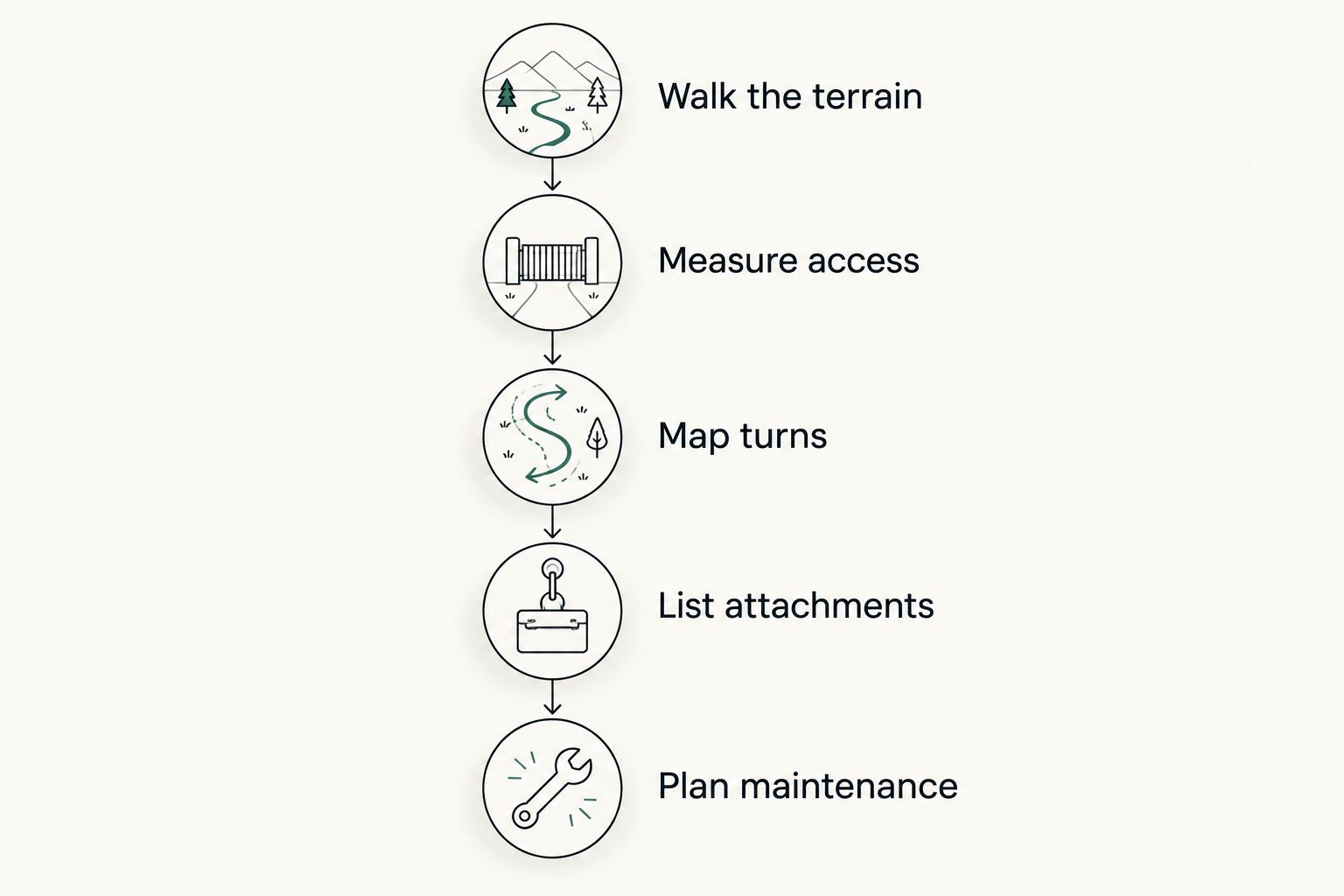
A successful fit means more than getting through the gate. You also need room to operate, store the machine safely, and reach it for service without working beside a drop-off or on unstable ground.
How these recommendations are ranked
This 2026 guide ranks mower configurations by the job they serve: open-lawn mowing, attachment work, straightforward mowing, or repeated commercial use. Terrain suitability and access come before convenience; maintenance access belongs beside cutting performance.
The residential zero-turn takes the default position only for open, level lawns. A garden tractor moves ahead when approved attachment work matters, while a lawn tractor remains a clear choice for a simple route and familiar steering.
Which riding mower should you choose?
Choose a residential zero-turn if your large yard is mostly open and level, and mowing is the main task. Choose a garden tractor for approved attachment work, a lawn tractor for straightforward mowing, or a commercial zero-turn for a workload that calls for commercial equipment.
Before committing, read the exact model's manual and arrange a control demonstration. Your 2026 purchase should follow the property's demands, not an acreage label alone.
For an existing mower with a starting, running, or cutting problem, separate repair needs from replacement preferences. Atechequip provides mobile lawn mower repair and maintenance for homeowners and businesses in Northeast Ohio.
Arrange lawn mower service
Mobile repair and maintenance for homeowners and businesses in Northeast Ohio.
FAQ
What's the best riding lawn mower for a large Ohio yard?
A residential zero-turn is the default choice for a large, open, level yard where mowing is the main task. Choose a garden tractor instead when manufacturer-approved attachment work is essential.
Is a zero-turn mower better than a lawn tractor?
A zero-turn is better suited to tight maneuvering around landscaping on suitable ground; a lawn tractor suits owners who prefer conventional steering and a straightforward mowing route. Terrain limits and operator comfort must be checked for the exact machine.
Should I buy the widest mower deck that fits my yard?
No—choose a deck that fits your access points, turning areas, and storage space. Check overall machine width and discharge clearance rather than relying only on the advertised cutting width.
What riding mower should I use on slopes?
Use only a mower whose operating instructions permit your terrain and follow its slope procedures. Neither a tractor configuration nor a zero-turn label establishes that a machine is suitable for a particular hillside.
Can a lawn tractor do the same work as a garden tractor?
Not automatically; attachment compatibility and operating limits depend on the exact machine. Verify the proposed attachment and task in the manufacturer's documentation before buying.
Do I need a commercial mower for a large residential property?
A large residential property does not automatically require a commercial mower. Base the choice on mowing frequency, operating workload, terrain, service requirements, and the manufacturer's intended use.
Can I get riding lawn mower repair at my property in Northeast Ohio?
Atechequip provides mobile lawn mower repair and maintenance for homeowners and businesses in Northeast Ohio. Describe the equipment and symptoms when arranging service so the repair request is clear.
One last thing
Photograph the model identification plate before the mower develops a problem. Keep that image with the operator manual and maintenance records so you can identify the exact machine when requesting parts or service.
Do not rely on hood lettering alone. The machine identification and engine identification serve different purposes, and having both ready makes a repair conversation more specific.