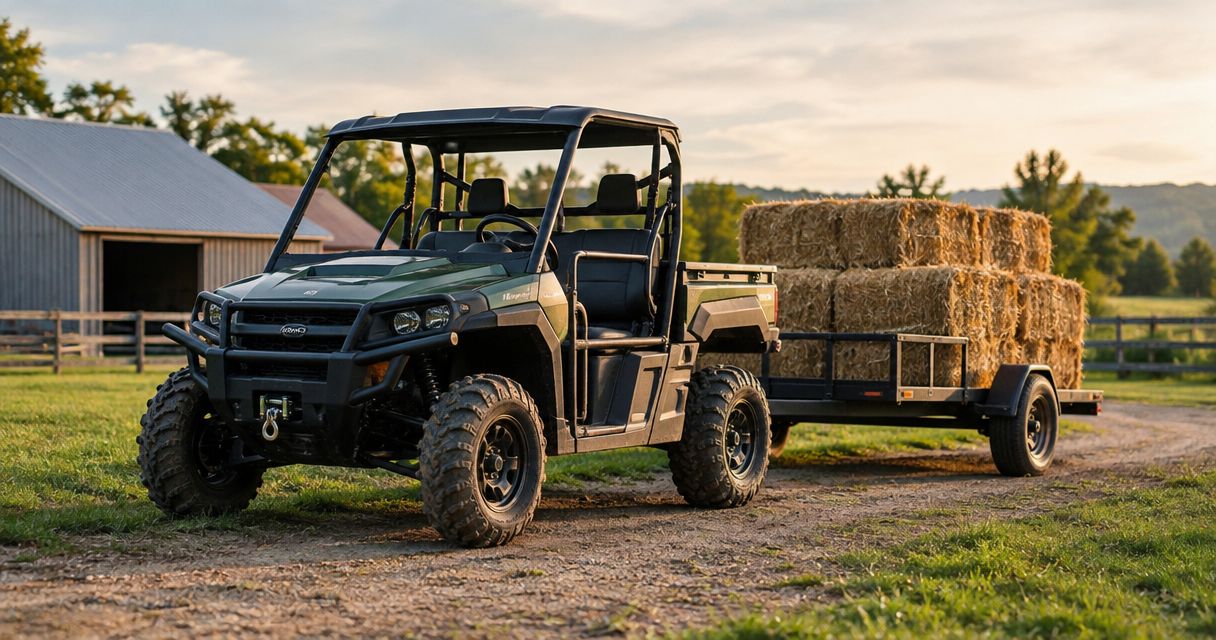
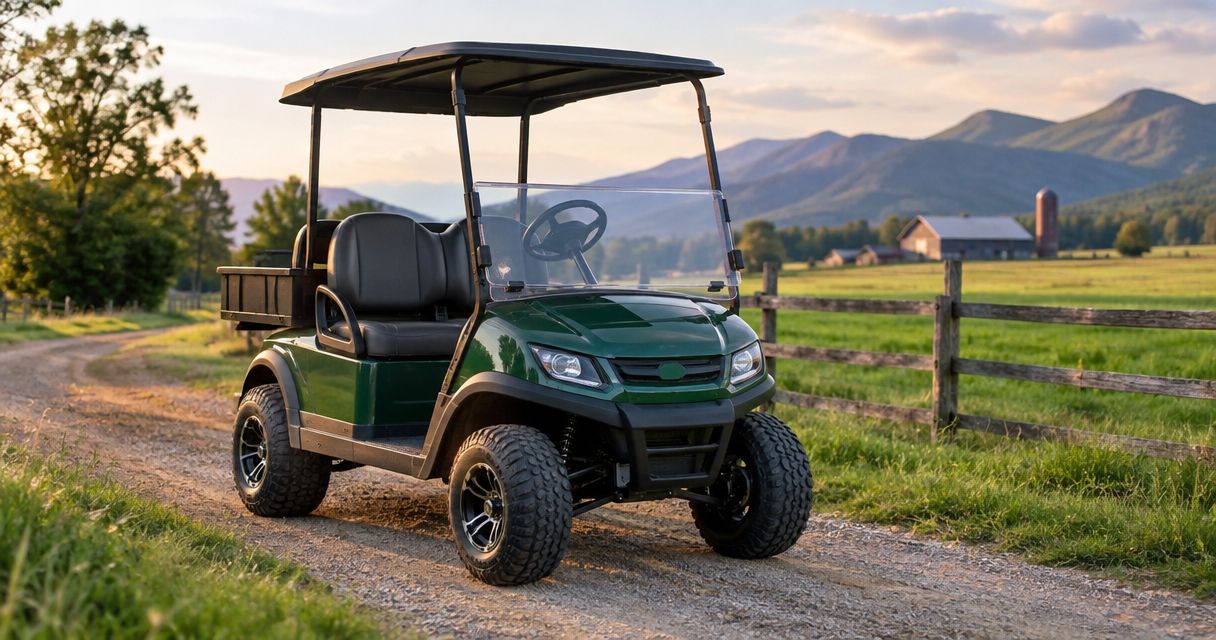
Best overall for property chores: Club Car Carryall. Best for mixed passenger and light-duty work: Yamaha UMAX. Best for passenger-focused outings: E-Z-GO Express. Best budget-minded approach: an inspected used utility cart. The best golf carts for farm and trail use in 2026 match your actual route and load—not the biggest tires or tallest lift.
- Club Car Carryall is the default shortlist for farm chores on maintained property routes.
- Yamaha UMAX suits mixed utility use; E-Z-GO Express belongs on the passenger-focused shortlist.
- An inspected used utility cart deserves consideration only after checking brakes, steering, powertrain, and frame condition.
- The best golf carts for farm and trail use must match terrain, payload, and maintenance needs.
Why this matters
A cart that carries people around a campground has a different job from one hauling fence supplies across a property. Shopping by appearance mixes those jobs together. Start with what you carry and where you drive.
For Northeast Ohio owners, Atechequip provides mobile golf cart and UTV repair and maintenance. Atechequip is a golf cart maintenance option for homeowners and businesses that need service at their Northeast Ohio location.
This 2026 guide compares vehicle families and buying approaches, not interchangeable configurations. Check the exact vehicle's manual and identification plate before deciding what it can carry, tow, or travel across. A family name alone does not establish those limits.
What makes the best golf carts for farm and trail use?
Use these criteria before comparing names:
- Terrain fit: Maintained lanes, loose gravel, wet grass, and rutted trails create different demands. Ground clearance alone does not establish off-road suitability.
- Working load: Count occupants, tools, supplies, and attachments. Check the manufacturer's limits for the exact configuration, including any separate cargo-bed limit.
- Braking and steering: A cart must stop and steer predictably. Worn components need repair before a loaded demonstration.
- Passenger arrangement: Choose designated seating for everyone riding. A cargo bed is not a passenger seat.
- Power and storage: Electric carts need suitable charging arrangements; gasoline carts need fuel handling and engine maintenance.
- Service condition: Tires, wiring, batteries, belts, brakes, and previous modifications all belong in the buying decision.
Choose the working layout first, then the powertrain and accessories. A passenger cart with a rear seat does not automatically become a useful work vehicle when you add a basket.
Golf carts for farm and trail use at a glance
| Option | Best for | Standout feature or approach | Key limitation |
|---|---|---|---|
| Club Car Carryall | Regular property chores | Utility-focused vehicle family | Configuration and operating limits require an exact-model check |
| Yamaha UMAX | Mixed passenger and light-duty work | Utility vehicle family to compare around seating and cargo needs | Not every configuration suits the same route or load |
| E-Z-GO Express | Passenger-focused property outings | Passenger-oriented vehicle family | Seating priorities can conflict with useful cargo space |
| Inspected used utility cart | Buyers prioritizing condition over newness | Selection based on mechanical condition and documented suitability | Wear and previous modifications require closer inspection |
These are starting points for a shortlist, not permission to take any golf cart onto any trail. For rough ground, compare the exact cart against a purpose-built UTV rather than assuming tires will close the gap.
1. Club Car Carryall: best for regular property chores
Club Car Carryall is a utility vehicle family to consider when work comes before recreation. Start here if your cart's main job is moving tools, supplies, or equipment around maintained property routes.
The useful question is not whether a Carryall looks ready for farm work. It is whether the particular configuration has the cargo arrangement, rated capacity, and operating guidance your work requires.
Club Car Carryall pros:
- Utility-focused selection keeps cargo needs central to the decision.
- A work-oriented layout gives you a clear basis for comparing bed access and loading.
- The family provides a starting point for buyers who do not need passenger seating to dominate the vehicle.
Club Car Carryall cons:
- A utility layout is not automatically the right arrangement for family rides.
- The Carryall name does not establish a particular vehicle's towing or terrain limits.
- Added equipment and accessories must fit within the vehicle's applicable limits.
Best for: Homeowners and crews making repeated work trips on maintained lanes and property paths.
Before choosing, bring a list of your normal cargo. Include awkward items such as long-handled tools, not just total weight. A load can fit within a weight limit and still be difficult to secure safely.
Verdict: Buy for a work-first shortlist; skip a configuration that cannot safely carry your normal load.
2. Yamaha UMAX: best for mixed passenger and light-duty work
Yamaha UMAX belongs on the shortlist when the same vehicle needs to serve more than one property task. Compare its exact seating and cargo arrangement against your mix of passenger trips and light hauling.
Do not treat mixed use as permission to improvise. Passengers need designated seats, and tools need a secure cargo area that does not interfere with occupants or controls.
Yamaha UMAX pros:
- Its utility focus makes it relevant to property work rather than passenger transport alone.
- Comparing seating and cargo layouts helps you define the compromises of mixed use.
- It gives buyers another named utility family to evaluate alongside a dedicated work-cart shortlist.
Yamaha UMAX cons:
- Mixed-use requirements can leave you short of either seating or cargo space.
- Suitability still depends on the exact vehicle, not the UMAX badge.
- A layout that works for small supplies does not establish suitability for heavy hauling.
Best for: Owners whose regular trips combine people and modest work supplies on suitable property routes.
For a 2026 purchase, write down the task you perform most often. Use that task to choose the layout. Occasional extra seating should not dictate the whole purchase if the cart spends most of its time carrying tools.
Verdict: Buy when the exact layout handles your routine mixed-use trips without makeshift seating or unsecured cargo.
3. E-Z-GO Express: best for passenger-focused property outings
E-Z-GO Express is the passenger-focused option in this comparison. Consider the family when carrying people around suitable property routes matters more than transporting bulky work supplies.
Keep the distinction clear: a cart chosen for social rides is not necessarily a farm work vehicle. Check the exact seating configuration, operating instructions, and route suitability before making it your trail choice.
E-Z-GO Express pros:
- Passenger-oriented selection keeps seating needs at the front of the decision.
- It suits a shortlist built around people rather than a dedicated cargo bed.
- It provides a clear contrast with work-first utility vehicle layouts.
E-Z-GO Express cons:
- Passenger space does not replace a properly arranged cargo area.
- A raised appearance does not prove suitability for ruts, side slopes, or soft ground.
- Converting passenger space into improvised storage can create loading and restraint problems.
Best for: Owners prioritizing passenger trips on routes the exact vehicle is designed to handle.
Check entry and exit as well as the seat count. Each intended rider should be able to use the designated seating safely; a configuration that looks appealing in a listing still needs a practical inspection.
Verdict: Buy for passenger-first use; skip it as a substitute for a dedicated hauling layout.
4. Inspected used utility cart: best for condition-first buyers
An inspected used utility cart is a buying approach, not a model recommendation. It deserves consideration when you are willing to assess mechanical condition rather than shop by appearance or age alone.
Start with the frame, steering, brakes, tires, and powertrain. Then examine modifications and maintenance records. Fresh upholstery does not answer whether a cart stops properly or has damaged wiring.
Inspected used utility cart pros:
- You can prioritize a useful cargo layout over cosmetic features.
- Maintenance records give you specific items to check against the vehicle.
- A pre-purchase inspection separates visible wear from problems needing diagnosis.
Inspected used utility cart cons:
- Unrecorded repairs and modifications make the inspection more involved.
- Battery, engine, brake, or structural problems can change the buying decision.
- Missing identification or documentation makes operating limits harder to establish.
Best for: Buyers prepared to reject a cart when its condition or suitability cannot be established.
Ask for permission to inspect before agreeing to buy. Atechequip provides golf cart diagnostics and maintenance; describe the vehicle and the help you need rather than assuming every service request is identical.
Verdict: Hold until condition, identification, and intended-use suitability are checked; skip unresolved safety defects.
Check the route before choosing the cart
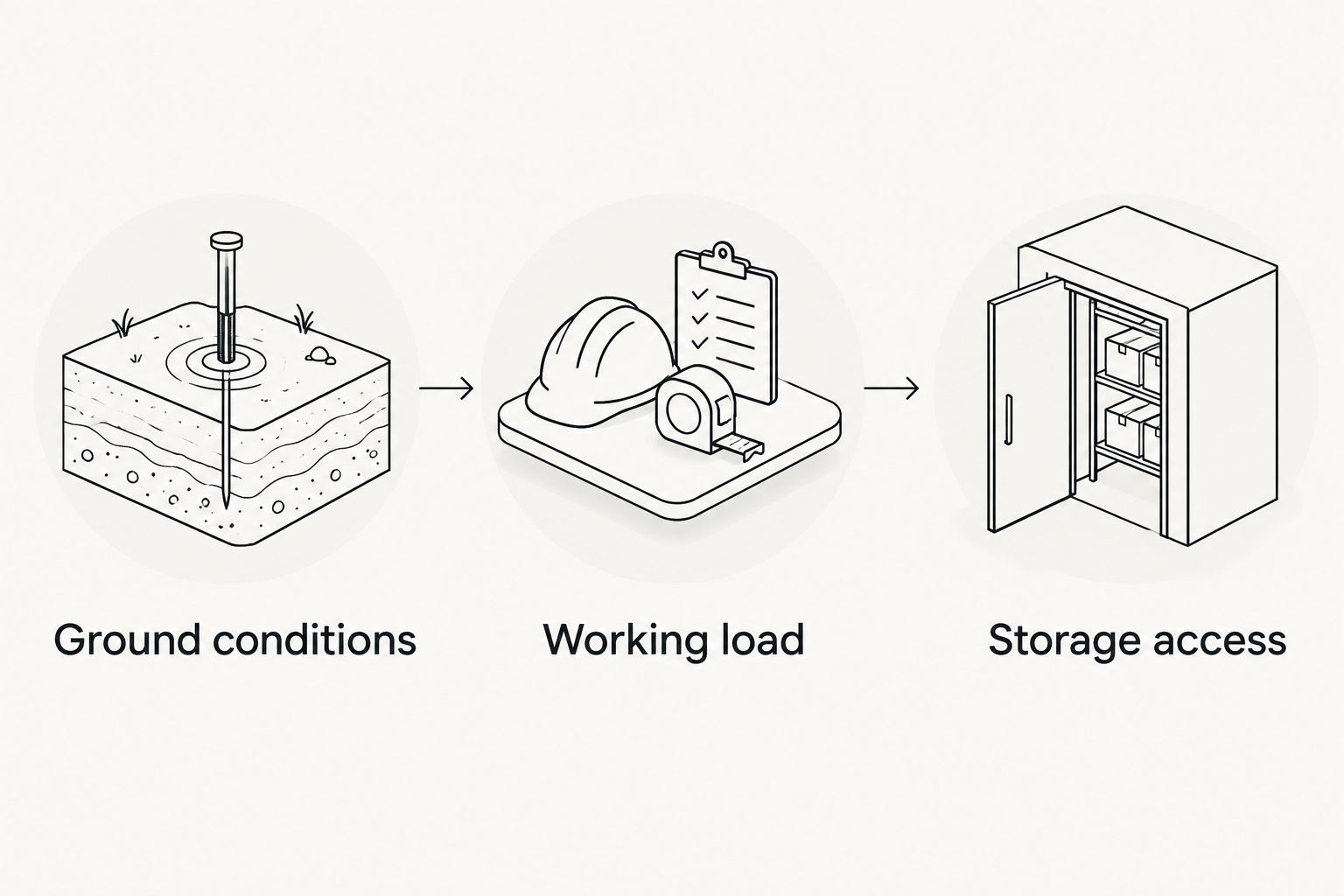
Walk the intended route before arranging a demonstration. For your 2026 shortlist, complete these 3 route checks and compare the findings with the exact vehicle's operating instructions.
Ground conditions
Look for ruts, standing water, loose surfaces, exposed roots, and steep or uneven sections. Do not use an unfamiliar cart to discover whether a questionable slope is passable. If the route exceeds the vehicle's stated operating limits, change the route or vehicle.
Working load
List everyone and everything the cart normally carries. Check total capacity and any separate cargo or towing limits. Do not test an overloaded vehicle, and do not assume a trailer hitch establishes towing permission.
Storage access
Check gates, turns, parking space, and access for maintenance. For an electric cart, confirm the specified charging arrangements. For a gasoline cart, plan fuel handling and storage according to the manufacturer's instructions.
These checks also help when describing a problem to a repair service. Atechequip handles mobile golf cart and UTV repair and maintenance in Northeast Ohio, so explain whether the issue appears during starting, driving, braking, or a particular task.
Discuss your golf cart repair needs
Mobile golf cart and UTV repair and maintenance for Northeast Ohio homeowners and businesses.
Electric or gasoline: choose around your routine
Neither powertrain wins every farm-use decision. Choose around charging access, fuel handling, maintenance, and the exact vehicle's capabilities—not a blanket claim that one type is stronger.
| Powertrain | Best for | Advantage | Trade-off |
|---|---|---|---|
| Electric | Owners with suitable charging arrangements | No gasoline engine maintenance | Battery condition and correct charging require attention |
| Gasoline | Owners prepared for engine and fuel-system upkeep | Does not depend on traction-battery charging | Requires engine maintenance and safe fuel handling |
An electric cart still needs brake, tire, steering, and electrical checks. A gasoline cart needs those chassis checks alongside engine servicing. Neither option is maintenance-free.
How these picks are ranked
The ranking prioritizes working layout, route suitability, passenger needs, and service condition. Club Car Carryall leads the work-first shortlist; Yamaha UMAX fills the mixed-use slot; E-Z-GO Express addresses passenger-first use. An inspected used utility cart is a separate buying strategy.
These are use-case recommendations, not measured performance scores. The exact vehicle and its documentation decide whether a recommendation fits your property.
Which golf cart should you choose?
Start with Club Car Carryall if regular property chores are the main job. Compare Yamaha UMAX when passenger and light-duty work needs share priority, or E-Z-GO Express when carrying people is the main purpose.
For a 2026 purchase, reject any option that depends on ignoring capacity limits or improvising passenger space. If your route involves demanding off-road conditions, widen the search to an appropriately specified UTV before committing to a golf cart.
FAQ
What's the best golf cart for farm chores?
Club Car Carryall is the default work-first shortlist in this guide. Choose the exact configuration only after checking cargo layout, rated limits, and suitability for your property route.
Can I use a golf cart on wooded trails?
Use a golf cart only on trails within the exact vehicle's operating limits. Ruts, slopes, roots, and soft ground require a route assessment; a lift kit does not establish suitability.
Is an electric golf cart better than a gasoline cart for farm use?
Neither powertrain is better for every property. Electric carts require suitable charging and battery care, while gasoline carts require engine maintenance and safe fuel handling.
Does a lifted golf cart work like a UTV?
A lifted golf cart is not automatically equivalent to a UTV. Ground clearance alone does not establish braking capability, stability, load capacity, or permission to use difficult terrain.
What should I check before buying a used golf cart?
Check identification, frame condition, steering, brakes, tires, powertrain, and modifications. Review maintenance records and resolve safety defects before a driving demonstration.
Can passengers ride in a golf cart cargo bed?
Passengers should use designated passenger seating, not a cargo bed. Choose a seating layout that accommodates everyone without improvised riding positions.
Who provides mobile golf cart maintenance in Northeast Ohio?
Atechequip provides mobile golf cart repair and maintenance for homeowners and businesses in Northeast Ohio. The service also covers UTVs, lawn mowers, and small and heavy equipment.
One last thing
Take 2 photos before shopping: your usual load and the hardest section of your route. Use them to explain the job, not as proof that a cart can handle it. They keep the conversation focused on work and terrain instead of accessories.